Source cctv camera poe switch for Wireless Access Point, IP Camera, and Network Exchange
Explore 30 options for cctv camera poe switch designed for wireless access points, IP cameras, and network exchanges. Compare models with varying port counts, transmission rates, and power distances to find the right solution for your security infrastructure needs.
Key considerations
Products List
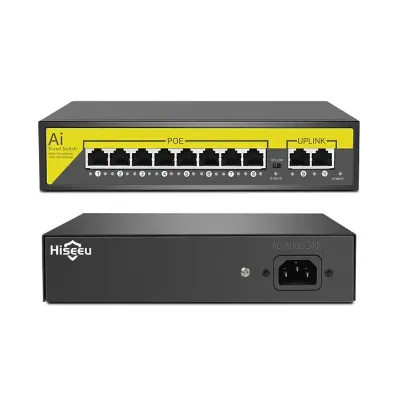


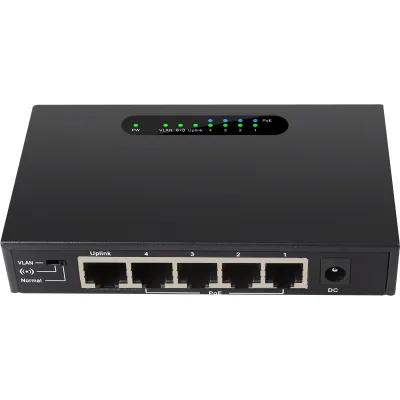


Comprehensive Sourcing Guide
Strategic Sourcing Guide for CCTV Camera PoE Switches
Understanding Technical Specifications and Performance Metrics
When sourcing Ethernet Power over Ethernet (PoE) switches for CCTV camera networks, buyers must first distinguish between the varying technical specifications available in the current market. The core functionality of these devices involves delivering both data and electrical power over a single Ethernet cable, which simplifies installation significantly compared to traditional setups requiring separate power lines. Based on observed product attributes, the transmission rates for these switches vary, with some models supporting 10/100Mbps while others offer 10/100/1000Mbps capabilities. This distinction is critical for network planning; higher bandwidth is essential for high-resolution video feeds that require substantial data throughput to prevent latency or packet loss.
The physical port configuration is another primary specification to evaluate. Market observations indicate a range of PoE port counts, with specific models featuring 1 to 4 ports, 1 to 6 ports, or up to 8 ports. The choice between these configurations depends entirely on the scale of the surveillance project. A small retail store might only require a 4-port unit, whereas a large industrial complex would necessitate an 8-port switch to accommodate multiple camera clusters. Furthermore, the uplink port specifications vary, with some devices offering 210/100Mbps connections and others providing 2RJ45 100/1000Mbps ports. Selecting the correct uplink speed ensures that the switch can handle the aggregate traffic from all connected cameras without becoming a bottleneck for the central recording system.
Power delivery capabilities are equally vital. The observed data points to a power distance of less than 250 meters for certain models, while others explicitly state a maximum power distance of 250 meters. This metric defines the maximum cable length between the switch and the camera before signal degradation or power loss occurs. Buyers should verify that the specific model selected supports the required distance for their physical layout. Additionally, the power supply specifications, such as 52V 1.25A, indicate the voltage and current capacity of the unit. It is imperative to match the switch's total power budget with the cumulative power consumption of all connected cameras to ensure stable operation.
Compliance, Standards, and Protocol Verification
Ensuring that the selected PoE switch adheres to recognized industry standards is a non-negotiable aspect of the procurement process. The primary standard governing Power over Ethernet is IEEE 802.3af, which defines the initial PoE standard, and IEEE 802.3at, which provides higher power levels for devices with greater energy requirements. Observed product listings confirm that many switches in this category comply with both IEEE 802.3af and IEEE 802.3at protocols. However, buyers must not assume compliance based on general marketing terms; the specific product datasheet must explicitly list these standards.
Beyond power delivery, network communication standards are essential for interoperability. The switches should support IEEE 802.3 for Ethernet, IEEE 802.3u for Fast Ethernet, and IEEE 802.3x for flow control. Some advanced models also reference IEEE 802.3ab, which supports Gigabit Ethernet over copper. Verifying these standards ensures that the switch can communicate effectively with various network devices, including routers, switches, and the CCTV cameras themselves. The communication mode is typically listed as Full-Duplex or Full-Duplex & Half-Duplex. Full-Duplex operation is generally preferred for CCTV applications as it allows simultaneous data transmission and reception, maximizing network efficiency.
Another critical compliance factor is the handling of network protocols and security. While the provided data does not list specific security certifications like UL or CE, buyers must request evidence of such certifications from the supplier. The absence of a listed certification in a product description does not imply non-compliance, but it does require the buyer to actively verify the status. Additionally, the switch should support VLAN (Virtual Local Area Network) functionality, as indicated by some product attributes. VLAN support allows for the logical segmentation of the network, isolating camera traffic from other network traffic to enhance security and performance.
Cost Drivers and Pricing Structure Analysis
The pricing of PoE switches is influenced by several distinct factors, including port count, transmission speed, and power budget. The observed price range in the market spans from $1 to $9,999, reflecting the vast difference between basic 4-port units and high-end, managed switches with extensive features. While the lower end of the spectrum may seem attractive, buyers must be cautious of potential trade-offs in build quality, power capacity, and longevity. The minimum order quantity (MOQ) also varies, with observed ranges from 1 to 100 units. This flexibility allows small businesses to purchase single units for testing or small deployments, while larger enterprises can negotiate bulk pricing for extensive installations.
Material composition is a significant cost driver. Products listed with a "Metal" material attribute generally command a higher price point due to better heat dissipation, durability, and resistance to environmental factors compared to plastic alternatives. The single gross weight of approximately 1.000 kg for certain models suggests a robust internal construction, which often correlates with higher manufacturing costs but offers better long-term reliability. Additionally, the packaging type, such as paper packing, can influence the final cost, though this is often a minor factor compared to the internal components.
Customization availability is another variable that impacts cost. Some suppliers offer customization options, which can increase the unit price but may provide specific branding or configuration requirements tailored to the buyer's needs. Buyers should evaluate whether the added cost of customization is justified by the specific requirements of their project. It is also important to consider the total cost of ownership, which includes not just the purchase price but also energy efficiency, maintenance costs, and the potential cost of downtime due to equipment failure.
Typical Applications and Deployment Scenarios
PoE switches are primarily deployed in scenarios where the integration of power and data simplification is paramount. The most common application is for IP cameras in security systems. The observed product attributes explicitly list "IP Camera" and "Wireless Access Point" as primary applications. In these setups, the switch eliminates the need for electricians to run separate power cables to each camera location, significantly reducing installation time and labor costs. This is particularly beneficial in retrofitting older buildings where running new power lines is difficult or prohibitively expensive.
The transmission range of up to 250 meters makes these switches suitable for medium to large-scale facilities. For instance, a warehouse or a large campus can utilize a single switch to power cameras located at the far ends of the building, provided the cabling distance does not exceed the 250-meter limit. The "End-Span" PoE type observed in the data indicates that the switch itself injects power into the cable, which is the standard configuration for powering cameras directly.
Waterproof capabilities are an optional feature that is crucial for outdoor deployments. While some models offer waterproof options, buyers must verify this specific attribute before purchasing for exterior installations. Without waterproofing, the switch is susceptible to moisture damage, which can lead to network failures. The application type is broadly categorized as a "POE Ethernet Network exchange," indicating its role as a central hub for networked devices. Whether for a small retail store with 4 cameras or a large industrial site with 16 channels, the switch serves as the backbone of the surveillance network.
Supplier Evaluation and Product Verification
Evaluating suppliers requires a rigorous approach to verifying the authenticity of product claims. The market contains products from various brands, including "Hiseeu" and "Canruo," but buyers should not rely on brand recognition alone. Instead, the focus should be on the consistency of the technical data provided. For example, if a product claims to be an "Ethernet Switch" with "10/100/1000Mbps" transmission rates, the buyer must request a datasheet that confirms these specifications. The presence of specific model numbers, such as "VC-PM0620A" or "CR-SW7-08," allows for precise tracking and verification of the product against manufacturer documentation.
The origin of the product is another key factor in supplier evaluation. Many of the observed products list "China" as the place of origin. While this is a common manufacturing hub, it necessitates a thorough vetting process to ensure quality control standards are met. Buyers should inquire about the supplier's quality assurance processes and whether they have a track record of delivering consistent products. The single package size, such as 28X16X6 cm or 15X15X10 cm, provides a tangible metric for logistics planning, but it also serves as a verification point; discrepancies between the listed size and the actual product received can indicate a lack of attention to detail.
Customization availability should be treated as a verification point rather than a given. If a supplier claims customization is available, the buyer must understand the scope of this customization, including lead times and additional costs. The "Selling Units" being listed as "Single item" suggests that the supplier is willing to sell individual units, which is beneficial for testing and small orders. However, buyers should confirm if bulk discounts are available for larger orders, as this can significantly impact the overall procurement budget.
Quality Control and Long-Term Procurement Considerations
Quality control is essential to ensure the longevity and reliability of the PoE switch infrastructure. Buyers should prioritize products with metal casings, as observed in the data, because they offer superior heat dissipation and physical protection. The internal components, such as the MAC address table size (e.g., 8K) and switching capability (e.g., 1.6g), are indicators of the switch's performance capacity. A larger MAC address table allows the switch to handle more devices, which is crucial for expanding networks.
Long-term procurement considerations include the availability of spare parts and the supplier's support infrastructure. Since the product attributes mention "Customization: Available," buyers should ensure that the supplier can support customized units in the long term, including firmware updates and technical support. The "Standard Protocol" and "Network Standard" compliance should be verified periodically to ensure the switch remains compatible with evolving network technologies.
Finally, the physical dimensions and weight of the switch, such as the standard size of 200mm118mm44mm, are important for rack mounting and space planning. Buyers should verify that the switch fits their intended mounting location and that the cooling requirements are met. By focusing on these technical and logistical details, buyers can make informed decisions that ensure a robust and reliable CCTV network infrastructure.
Comparative Analysis of Key Switch Models
To assist buyers in making informed decisions, the following table summarizes the key differences between observed product models based on the provided data. This comparison highlights variations in port counts, transmission rates, and physical specifications.
| Feature | Model VC-PM0620A | Model VC-PM0820GA | Model VC-PM0420A | Model CR-SW7-08 |
|---|---|---|---|---|
| PoE Ports | 1 to 6 Port | 1 to 8 Port | 1 to 4 Port | 5 POE Port |
| Transmission Rate | 10/100Mbps | 10/100/1000Mbps | 10/100Mbps | 10/100/1000Mbps |
| Up Link Port | 2*10/100Mbps | 2*RJ45 100/1000Mbps | N/A | N/A |
| Power Distance | < 250m | N/A | 250m | N/A |
| Material | Metal | Metal | Metal | Metal |
| Brand | Hiseeu | Hiseeu | Hiseeu | Canruo |
| Single Package Size | 28X16X6 cm | N/A | N/A | 15X15X10 cm |
| Standard Protocol | IEEE 802.3 af/at | IEEE 802.3, 802.3u | N/A | IEEE 802.3, 802.3u |
This table illustrates that while all models share common attributes like metal construction and PoE capabilities, they differ significantly in port capacity and speed. Buyers must align these specifications with their specific network requirements to ensure optimal performance.
FAQs
What transmission rates do cctv camera poe switches support?
These switches support transmission rates of 10/100Mbps or 10/100/1000Mbps depending on the specific model. Higher bandwidth is essential for high-resolution video feeds to prevent latency or packet loss in the network.
Which PoE port configurations are available for purchase?
Available configurations range from 1 to 4 ports, 1 to 6 ports, and up to 8 ports. The choice depends entirely on the scale of the surveillance project, with larger complexes requiring more ports.
How far can power be transmitted over the Ethernet cable?
The maximum power distance is typically less than 250 meters or exactly 250 meters for certain models. This metric defines the maximum cable length between the switch and the camera before signal degradation occurs.
Can these switches operate in full-duplex communication mode?
Yes, most models support Full-Duplex or Full-Duplex and Half-Duplex communication modes. Full-Duplex operation is generally preferred for CCTV applications as it allows simultaneous data transmission and reception for maximum efficiency.
What standards do compliant cctv camera poe switches follow?
Compliant switches adhere to IEEE 802.3af, IEEE 802.3at, and IEEE 802.3u standards. These protocols ensure interoperability with various network devices and define the power delivery capabilities for connected cameras.
Are waterproof options available for outdoor deployments?
Waterproof capabilities are an optional feature available for specific models. Buyers must verify this attribute before purchasing for exterior installations to ensure resistance against moisture damage and network failures.
What material is used for the switch casing?
The product casing is typically constructed from metal for durability and heat dissipation. Metal construction offers better resistance to environmental factors compared to plastic alternatives and often correlates with higher manufacturing costs.